Analyst Perspective: Long-Term, Quality & Value-Oriented Capital Allocator
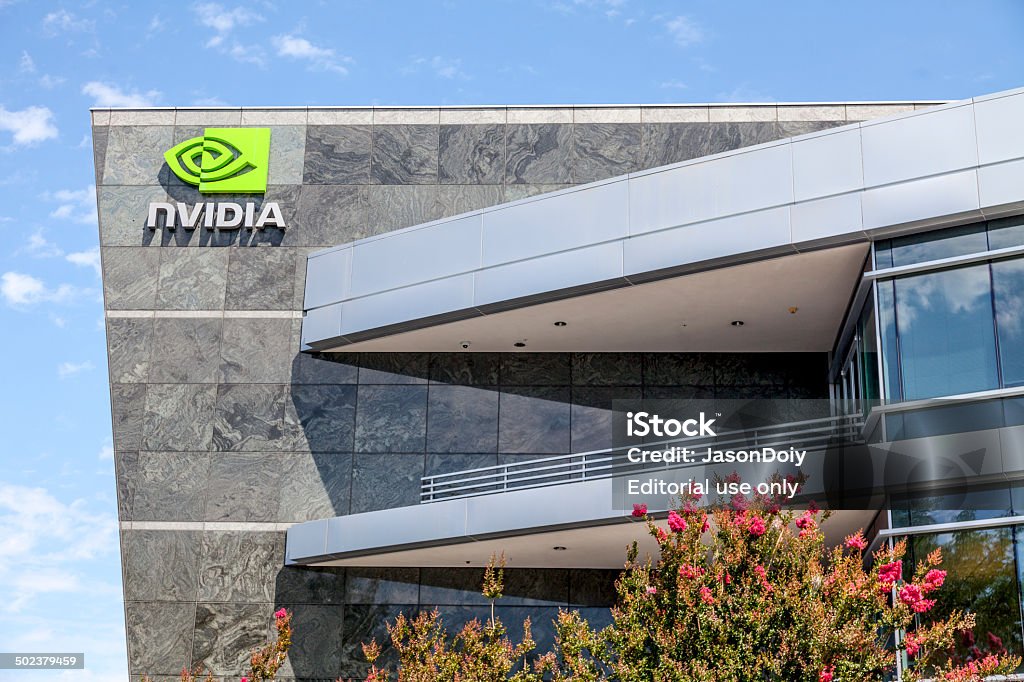
🔶 1. BUSINESS OVERVIEW & ECONOMIC MOAT
Business Model & Revenue Segments
NVIDIA has transformed from a graphics chip company into a full-stack computing platform company centered on accelerated computing and AI. Its model is a virtuous cycle: superior hardware (GPU silicon) drives adoption of its software platform (CUDA), which in turn locks in developers and entrenches hardware demand.
Revenue Breakdown (LTM Q3 FY25):
- Data Center (≈80% of Revenue, >90% of Profits): The core engine. Includes:
- AI Training & Inference Systems: DGX servers, HGX platforms, and discrete GPUs (H100, H200, Blackwell B200/GB200). Serves hyperscalers (AWS, Azure, GCP), enterprise AI, and sovereign AI initiatives.
- Networking: InfiniBand and Spectrum Ethernet switches, creating a high-performance, low-latitude “AI fabric” that locks in system-level sales.
- Software & Services: Enterprise AI software (NVIDIA AI Enterprise), cloud services (DGX Cloud), and the emerging Omniverse platform.
- Gaming (≈15% of Revenue): GeForce GPUs for PC gaming. Serves a cyclical but loyal enthusiast market. Acts as a consumer-facing brand engine and a high-volume manufacturing scale driver.
- Professional Visualization (≈3%): Quadro/NVIDIA RTX GPUs for designers, engineers, and content creators (CAD, animation, VFX). A high-margin, niche segment.
- Automotive (≈2%): DRIVE platform for ADAS and autonomous driving (e.g., NVIDIA DRIVE Thor). A long-term growth story tied to software-defined vehicle architecture.
- OEM & Other (≈<1%): Legacy components and crypto-related residual.
The Critical Software Layer: Beyond hardware, NVIDIA’s strategic depth lies in its software and platform ecosystem:
- CUDA: The cornerstone of its moat. A parallel computing platform and API model that has become the de facto programming standard for AI and HPC. Over 4 million developers are trained on it.
- Libraries & SDKs: cuDNN, TensorRT, RAPIDS, etc., optimized for NVIDIA silicon, delivering 10-100x performance gains vs. generic code.
- NVIDIA AI Enterprise: Subscription software suite for enterprise AI development and deployment.
- Omniverse: A platform for building and operating 3D industrial digital twins, connecting to major design software suites (Autodesk, Siemens, Adobe).
Economic Moat Analysis (Buffett Framework)
NVIDIA possesses one of the widest and most defensible economic moats in technology, built on multiple interconnected layers.
- Technological Lead (Architecture & Silicon): Sustained 2-3 year architectural lead over competitors (Hopper vs. MI300X, Blackwell vs. upcoming competition). This stems from 15+ years of focused R&D in parallel processing, now perfectly aligned with the AI era. Competitors cannot simply copy; they must reverse-engineer architecture, software, and system design.
- Unparalleled Software & Ecosystem Lock-In (CUDA): This is the primary source of moat durability. The cost for an AI research lab or cloud provider to switch to an alternative (AMD, Intel, custom ASIC) is prohibitive. It involves:
- Retraining thousands of data scientists and engineers.
- Rewriting millions of lines of optimized code.
- Rebuilding entire software stacks, tools, and workflows.
This creates immense customer captivity.
- High Switching Costs & Mission-Critical Infrastructure: For hyperscalers and large enterprises, NVIDIA’s platform is not a commodity purchase; it’s strategic infrastructure for AI competitiveness. Downtime or performance regression is unacceptable, making switching a multi-year, high-risk endeavor.
- Scale Advantages in R&D, Design, and Supply Chain: NVIDIA’s ~$20B annual R&D budget and massive scale allow it to:
- Afford the world’s leading chip designers and software engineers.
- Secure premium wafer allocation and advanced packaging (CoWoS) from TSMC.
- Invest in next-generation technologies (e.g., photonics, quantum) years ahead of rivals.
- Brand & Performance Leadership: “NVIDIA” is synonymous with AI acceleration. This drives a performance brand premium, allowing pricing power and first-choice status for new deployments.
- Network Effects: More developers using CUDA → more software optimized for NVIDIA → more customers buying NVIDIA hardware → more investment in the ecosystem. This is a powerful, self-reinforcing flywheel.
Moat Sustainability (10-20 Year View) & Erosion Risks
Sustainability Assessment: NVIDIA’s moat is durable but not impenetrable. Its software ecosystem (CUDA) is the key longevity asset, likely to persist even if hardware dominance partially erodes. The shift from selling chips to selling full-stack systems and subscriptions (DGX Cloud, AI Enterprise) deepens the moat.
Moat Erosion Risks (Probabilistic Assessment):
- High Probability / Moderate Impact: Hyperscaler Custom Silicon (Google TPU, AWS Trainium/Inferentia, Microsoft Maia). These will capture an increasing share of inference workloads, which are more cost-sensitive. However, they often fuel demand for NVIDIA’s superior training platforms. This caps NVIDIA’s total addressable market (TAM) penetration but doesn’t eliminate it.
- Moderate Probability / High Impact: A viable, open-source software stack for competitor hardware (e.g., AMD’s ROCm gaining CUDA parity). Progress is slow, but government or industry consortia could accelerate it to avoid single-vendor dependency.
- Moderate Probability / Moderate Impact: Advanced competitor hardware (AMD, Intel). They will gain share in specific workloads and price-sensitive segments, applying margin pressure. However, catching NVIDIA’s full-stack advantage is a decade-long endeavor.
- High Probability / High Impact: Geopolitical/Export Restrictions. Decoupling from the China market creates a permanent revenue haircut and fuels domestic competitors (e.g., Huawei Ascend).
- Low Probability / Catastrophic Impact: Architectural Disruption (e.g., quantum or optical computing leapfrogging transistor-based acceleration). NVIDIA is actively investing in these fields.
Conclusion: The moat is wide and likely to persist for the next decade, but its absolute dominance (90%+ market share) will likely moderate to a still-leading 60-70% share as alternatives mature. The moat is shifting from pure hardware to hardware + network + platform.
🔶 2. INDUSTRY & COMPETITIVE LANDSCAPE
Competitive Position: Full-Stack Dominance
| Competitor | Strengths | Weaknesses vs. NVIDIA | Threat Level |
|---|---|---|---|
| AMD | Strong GPU architecture, competitive pricing, ROCm software push, CPU+GPU integration. | ROCm ecosystem vastly inferior to CUDA, lacks NVIDIA’s system-level networking stack, brand lag in AI. | HIGH in raw hardware, MODERATE in full-stack. Primary share gainer in near-term. |
| Intel | Legacy manufacturing, broad data center footprint (CPU), deep pockets, Gaudi roadmap. | Late to AI accelerator game, software stack immature, struggling with execution and foundry transition. | MODERATE, but improving. A credible long-term #3. |
| Hyperscaler Silicon (Google, AWS, MSFT) | Perfect vertical integration for their clouds, cost-optimized for specific workloads (esp. inference). | Not sold externally; they often compete with their own cloud customers. Focused on specific tasks, not general AI acceleration. | HIGH for inference on their own clouds, LOW for training and external sales. They are both customers and competitors. |
| Custom ASIC Startups (Cerebras, SambaNova, Groq) | Novel architectures (wafer-scale, LPU) can excel in niche workloads (LLM inference). | Lack scale, general-purpose capability, and the vast software ecosystem. Often acquisition targets. | LOW for broad market, but potential disruptors in specific domains. |
Strategic Evaluation
- AI Training & Inference: Unchallenged leader in training. Inference will see bifurcation: NVIDIA dominates complex, multi-model inference; custom silicon wins on high-volume, fixed-model tasks.
- Generative AI Infrastructure: The indispensable pick-and-shovel provider. Every major LLM (GPT, Gemini, Llama, Claude) has been trained on NVIDIA clusters.
- Omniverse & Digital Twins: A visionary, long-term platform play to create a “digital industrial economy.” No direct competitor at scale. If successful, creates another ecosystem moat.
- Foundry Dependence (TSMC): A critical vulnerability. NVIDIA is TSMC’s #2 customer. Its success hinges on TSMC’s process leadership and CoWoS packaging capacity. Diversification to Intel Foundry or Samsung is possible but performance-critical.
Macro Trends & Conclusion
Trends Favoring NVIDIA: Explosive Enterprise AI Adoption, Sovereign AI (nation-state investments), Shift from General to Accelerated Computing, Robotics/Automation, Software-Defined Vehicles.
Trends Challenging NVIDIA: Supply Chain Nationalization, Custom Silicon Proliferation, Open-Source Software Initiatives, Geopolitical Fragmentation.
Competitive Strength Conclusion: NVIDIA is gaining absolute competitive strength in the near-term (1-3 years) due to the Blackwell transition and AI hype cycle. In the long-term (5-10 years), its relative market share will likely peak and gradually recede from current extreme levels, but it will remain the dominant and most profitable player in the AI accelerator space due to its unmatched platform.
🔶 3. MANAGEMENT QUALITY (BUFFETT CRITERIA)
Jensen Huang is the rare founder-CEO who is both a visionary technologist and a disciplined operator—a combination Buffett admires.
- Vision & Capital Allocation Discipline: Huang foresaw the importance of parallel computing (CUDA, 2006) and AI (>10 years ago) and patiently invested billions during years of skepticism. This is classic long-term, opportunity-focused capital allocation. Recent investments in robotics and Omniverse show continued long-term orientation.
- Culture of Innovation & Execution: Fosters an intense, meritocratic engineering culture. The ability to execute on a 2-year cadence of world-leading architectures (Ampere → Hopper → Blackwell) is exceptional.
- Shareholder Alignment: Huang owns a significant, founder-led stake (~3.5%), aligning interests. He takes a modest cash salary ($1), with compensation tied to stock performance.
- Rationality & Candid Communication: Management has generally been transparent about cycles (e.g., gaming post-crypto, China restrictions). They reinvest aggressively but maintain strong profitability.
- Buffett-Style Assessment: Buffett traditionally avoids tech due to rapid change. However, NVIDIA under Huang exhibits many “wonderful business” traits: pricing power, low capital intensity (fabless model), high ROIC, and a durable competitive advantage. The main deviation is the requirement for continuous massive R&D reinvestment to defend the moat, which Huang has proven masterful at directing.
Verdict: World-class, visionary, and execution-focused management. A significant positive.
🔶 4. FINANCIAL ANALYSIS (DEEP FUNDAMENTAL REVIEW)
Key Metrics & Trends (FY21-FY24 LTM):
- Revenue Growth: Explosive, from $16.7B (FY21) to ~$90B (LTM Q3 FY25). Data Center growth >100% YoY, now the overwhelming driver.
- Margins:
- Gross Margin: Expanded from ~62% (FY21) to ≈75-78% (LTM). Driven by mix shift to higher-margin Data Center systems and pricing power.
- Operating Margin: Expanded from ~35% to ≈60%, demonstrating immense operational leverage. The business model is highly scalable.
- Profitability & Returns:
- ROIC: Consistently >30%, recently >100%, indicating extraordinary returns on incremental capital. This is a hallmark of a wide-moat business.
- Free Cash Flow: $7.2B (FY21) to ≈$30B+ (LTM). Massive FCF generation.
- Balance Sheet & Capital Allocation:
- Net Cash Position: ~$25B. Fortress balance sheet.
- R&D: ~$8.7B annually and growing. Non-negotiable for moat defense.
- Share Repurchases: Active program, but dwarfed by SBC dilution. Net shares outstanding have been roughly flat. Capital allocation prioritizes R&D and strategic positioning over aggressive buybacks.
Segment Insights:
- Data Center: Estimated operating margins >70%. The profit engine.
- Gaming: Margins ~45-50%. Volatile, tied to product cycles and crypto.
- Software: High-margin (≈85-90%) but small. Key for long-term margin stability and recurring revenue.
Scenario Analysis:
- Bull Case (30% Probability): NVIDIA maintains ~80% AI training share for 5+ years, successfully monetizes software/platform, Omniverse becomes a new OS for industry. Revenues >$300B by 2030, sustained margins >65%.
- Base Case (50% Probability): Competition gradually takes share in inference and cost-sensitive training. NVIDIA remains leader with ~60% share, grows with overall AI TAM. Revenues ~$200B by 2030, margins normalize to 55-60%.
- Bear Case (20% Probability): CUDA lock-in erodes rapidly, hyperscalers and AMD/Intel take majority share. NVIDIA reverts to a lower-margin, cyclical hardware vendor. Revenues plateau, margins compress to 40-45%.
Financial Durability: Exceptional in the near term. Long-term durability depends on software/platform transition to offset eventual hardware margin pressure.
🔶 5. VALUATION
Current Market Context (NVDA ~$1.2T Market Cap, ~$130-$140/share): The market prices in near-perfect execution for the next 3-5 years.
1. DCF Analysis (15-Year, Three-Stage):
- Assumptions (Base Case):
- Years 1-5: 25% CAGR revenue growth, gradual operating margin compression to 55%.
- Years 6-10: 12% CAGR growth, margins to 50%.
- Terminal: 4% growth, 10% WACC.
- Result: Intrinsic Value ≈ $105-$125 per share. Sensitive to terminal growth (1% change = ±$20/share) and margin assumptions.
2. Owner Earnings (Buffett Adjusted FCF):
- Owner Earnings = FCF – Maintenance CapEx + R&D (treated as growth capex). For NVIDIA, R&D is entirely growth-oriented.
- LTM FCF ~$30B. Maintenance CapEx minimal (~$500M). Owner Earnings ≈ $29.5B.
- At current market cap, Price/Owner Earnings ≈ 40x. This is a high but not irrational multiple for a business growing OE at >30% annually. Requires sustained high growth.
3. Relative Valuation & Market Expectations:
- P/E (NTM): ~35x. High vs. historical (~25x) but lower than 2023 peak (>60x). Pricing in continued high-teens EPS growth.
- P/FCF: ~40x. Premium justified only by unmatched growth profile.
- PEG Ratio (NTM): ~1.2x. Suggests the stock is pricing in growth slightly above consensus.
- Peer Comparison: Trades at a significant premium to semi-peers (AVGO, AMD, INTC) but at a discount to software/platform companies (MSFT, ADBE). The market prices it as a high-growth hybrid.
**Valuation Conclusion: Based on a conservative DCF and the high multiple on owner earnings, NVIDIA’s current price sits at or slightly above its intrinsic value in a Base Case scenario. It is fairly valued to slightly overvalued, with no margin of safety for a traditional value investor. All future returns are contingent on flawless execution and AI adoption exceeding current lofty expectations.
🔶 6. RISKS & PROBABILISTIC ANALYSIS
| Risk Factor | Probability | Financial Impact | Mitigation / Commentary |
|---|---|---|---|
| AI Demand Cyclicality / Overestimation | Medium-High | High | Enterprise AI spend could prove cyclical. NVIDIA’s diversification into software/recurring revenue is a partial hedge. |
| Hyperscaler Custom Silicon Proliferation | High | Medium-High | Limits TAM, caps pricing power in inference. NVIDIA’s response is to move upstack (DGX Cloud, AI software) and lead in training. |
| China Export Restrictions Worsen | High | Medium | Permanent loss of a ~20-25% market. Fuels Chinese competitors. Diversification to other regions (ME, Asia ex-China) is necessary. |
| Valuation Compression | High | High | The largest near-term risk. Multiple could contract sharply on any growth disappointment. |
| TSMC Supply Chain Disruption | Low | Catastrophic | Geopolitical (China/Taiwan) or technical. NVIDIA is working with other foundries (Intel) but with a performance/time lag. |
| Major Execution Misstep | Low | High | Blackwell transition is execution-heavy. Delays or defects would be severely punished. |
| Regulatory (Antitrust) | Medium | Medium-Low | Scrutiny is rising due to dominant position. Likely outcome is behavioral remedies, not a break-up. |
Probabilistic Weighted Scenario: Assigning probabilities to our earlier scenarios (Bull 30%, Base 50%, Bear 20%) and crude IV estimates (Bull $180, Base $115, Bear $70) yields a Probability-Weighted IV of ~$118. This again suggests the current price is fairly valued.
🔶 7. LONG-TERM INVESTMENT THESIS (BUFFETT STYLE)
The Core Question: Is NVIDIA a “wonderful business” at a “fair price” that can compound capital for decades?
- Durable Advantages? YES. The CUDA ecosystem is a deep, structural advantage akin to an operating system. It will decay slowly, not collapse.
- Sustained AI Demand? LIKELY. AI is a fundamental technology shift, not a fad. Demand will be strong for a decade, though likely volatile.
- Compound Cash Flows? PROBABLY, BUT AT A MODERATING RATE. From an exceptionally high base, compounding at 20%+ for a decade is improbable. A 10-15% annual cash flow growth rate is more plausible and still excellent.
- “Forever Compounder”? UNLIKELY IN THE BUFFETT SENSE. The pace of technological change in semiconductors is antithetical to “forever” holdings like Coca-Cola or See’s Candies. It is a long-cycle compounder for the next economic era (the AI era).
Theses:
- Bullish (30%): NVIDIA is the defining company of the AI revolution. Its full-stack platform becomes the computing standard for the next decade, allowing it to compound FCF at >20% annually. It is the next Microsoft/Apple of the 2020s.
- Neutral/Base (50%): NVIDIA is a phenomenal company at a full price. It will grow significantly but face increasing competition, leading to strong but decelerating returns. It will outperform the market only if execution remains flawless.
- Bearish (20%): Technological disruption, moat erosion, or a severe AI investment winter leads to significant multiple compression and stagnant growth. Shareholders experience a lost decade.
🔶 8. DECISION: BUY, HOLD, OR SELL
For a Strict Buffett-Style Value Investor:
- Verdict: HOLD (if owned) / PASS (if not owned).
- Rationale: The business is “wonderful” – wide moat, superb management, high ROIC. However, the price is not “fair”—it is full, offering no margin of safety. The required growth to justify the price is already widely anticipated. It fails the classic Ben Graham test of price versus intrinsic value.
- Margin of Safety: NEGATIVE. Current price implies perfection.
- Monitoring Checklist:
- Quarterly Data Center Growth Rate (deceleration below 30% QoQ is a warning).
- Gross Margin Trajectory (peaking margins would signal pricing pressure).
- Software/Recurring Revenue Growth (key for long-term thesis).
- Competitive Win Rates (any major hyperscaler design win loss to AMD/Intel).
- TSMC Capacity Allocation & CoWoS Supply.
For a Long-Term Growth-Oriented Quality Investor:
- Verdict: HOLD. It is a core holding for the AI theme, but not a place to deploy significant new capital at these levels. Accumulate only on material weakness (≥25% pullback).
🔶 9. SUMMARY FOR DIFFERENT INVESTOR TYPES
| Investor Type | Takeaway | Action |
|---|---|---|
| Long-Term Value Investor (Buffett/Graham) | Wonderful business, terrible price. No margin of safety. Outside classic value circle of competence due to rapid change. | PASS / SELL. Wait for a price providing a 25-30% margin of safety (~$80-$90). |
| Growth Investor | Premier growth asset of the era. Leader in the most transformative tech trend. High valuation justified by runway. | HOLD as core position. Use volatility for strategic accumulation. Monitor growth metrics obsessively. |
| Income Investor | Negligible dividend. Total return dependent entirely on price appreciation. Unsuitable. | AVOID. |
| ETF/Mutual Fund Manager | Must-own mega-cap. Index weight forces ownership. Active managers must decide on sizing relative to benchmark. | MARKET-WEIGHT or SLIGHT UNDERWEIGHT for active managers due to valuation concerns. |
| Conservative “Wonderful Business” Investor | The business quality is A+. The uncertainty of technological longevity and the extreme valuation introduce significant risk. | SMALL, PATIENT HOLD. Only allocate a portion you are willing to hold through severe volatility. |
NVIDIA Investment Profile Snapshot
| Metric | Current Profile | Comment |
|---|---|---|
| Segment Revenue Mix | DC 80%, Gaming 15%, ProVIZ/Auto 5% | Extreme concentration in DC; strength and risk. |
| Margin Profile | GM ~76%, OM ~60% | Peak/unsustainable levels. Expect normalization. |
| Data Center Contribution to Profits | >90% | Single-point-of-failure risk. |
| Gaming Contribution | Cyclical cash flow & scale driver. | Volatile, but provides consumer brand and manufacturing scale. |
| Semiconductor Cycle Risk | High, but masked by AI hypergrowth. | Inevitable downturn will come; severity is the question. |
| Bull/Base/Bear IV Range | $180 / $115 / $70 | Wide range reflects high uncertainty. Current Price: ~$130. |
| Major Risk Probabilities | See Section 6 | Valuation Compression & Competition are most probable near-term risks. |
FINAL ANALYST NOTE: NVIDIA represents the paradox of our time: a company with arguably the strongest strategic and competitive position in the world, trading at a valuation that demands it maintain this position almost indefinitely in a notoriously cyclical and disruptive industry. It is the ultimate quality versus price conundrum. For most disciplined investors, the prudent course is admiration from a distance until Mr. Market offers a more compelling entry point.
Disclaimer
This analysis is for educational and informational purposes only and should not be considered financial advice, investment guidance, or a recommendation to buy or sell any security. Stock markets involve risk, and past performance is not indicative of future results. Always conduct your own research or consult a qualified financial advisor before making investment decisions. The author and publisher are not responsible for any financial losses that may occur from using this information.
MORE CONTENT—Apple Inc. (AAPL): The Definitive Value Investor’s Analysis